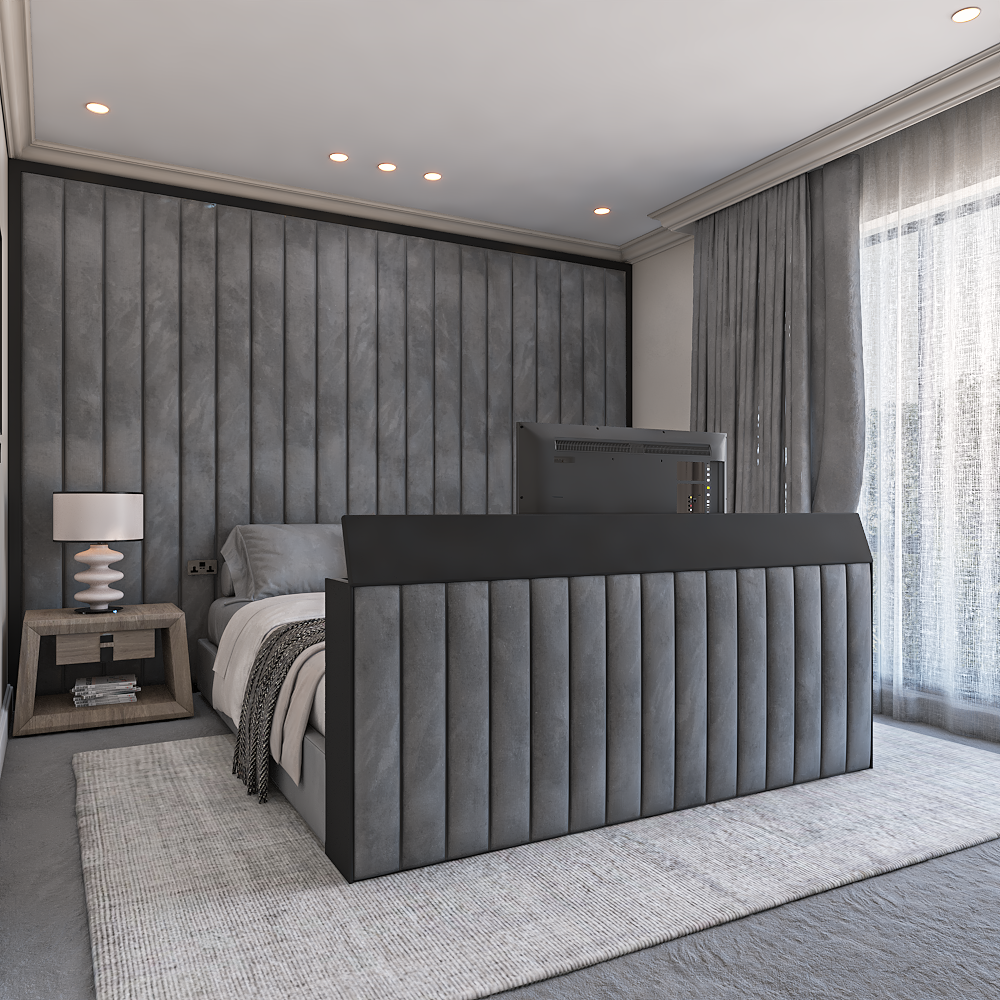

Article: How to Choose the Best End of Bed TV Stand

How to Choose the Best End of Bed TV Stand
Let's agree on one thing first.
Watching TV in bed should feel relaxing. Not awkward. Not uncomfortable. The right end of bed TV stand can completely change your bedroom experience. It saves space. It improves viewing comfort. And it keeps your bedroom looking calm and organised.
This guide walks you through every detail. Step by step. Simple. Practical. Real.
What Is an End of Bed TV Stand
An end of bed TV stand sits neatly at the foot of your bed.
It holds your television at a height that feels natural when you are lying down. Some designs keep the TV visible at all times. Others hide it away and lift it when you press a button. The purpose is clear. Enjoy TV in bed without cluttering walls or blocking walkways.
Why Use a TV Stand at the Foot of the Bed
Wall-mounted TVs often sit too high. That strains the neck. And it breaks the calm look of a bedroom. A TV stand at the foot of the sleeping unit fixes this.
Key Benefits of an End of Bed TV Stand:
1. Better viewing height
2. No wall drilling
3. A balanced room layout
Many people find it more relaxing. Especially for evening viewing.

End of Bed TV Stand vs TV Bed
Both options look modern. But they serve different needs. A TV bed has a built-in TV lift inside the bed frame. An end of bed TV stand is separate furniture.
Here’s a clear comparison.
|
Feature |
End of Bed TV Stand |
TV Bed |
|
Works with existing bed |
Yes |
No |
|
Upgrade TV easily |
Yes |
No |
|
Cost |
Lower |
Higher |
|
Flexibility |
High |
Limited |
If you already love your bed, a stand makes more sense.
Who Should Buy an End of Bed TV Stand
This option works well if:
1. You rent your home
2. You want flexibility
3. You may change your bed later
4. You prefer modular furniture
It's also ideal for couples.
One can watch TV.
The other can still rest comfortably.
Bedroom Layout Basics
Before buying anything, look at your bedroom layout.
Ask yourself:
1. Is there space at the foot of the bed?
2. Can drawers open freely?
3. Is there enough walking space?
A good setup feels open.
Nothing should feel cramped or blocked.
Measuring Your Bed Width
Width matters more than people think.
The TV stand should align with your bed width.
Not wider. Not too narrow.
Quick guide:
1. Single bed: slim stand
2. Double bed: medium width
3. King bed: wider stand
Balance always looks better.
Measuring Available Space
Measure the distance from:
1. Bed foot to wall
2. Bed foot to wardrobe
Leave at least 60 cm for walking space. This makes daily movement easy. And keeps the room feeling open.
Ideal Height for Viewing
Here's where comfort really matters.
The centre of the TV screen should sit close to eye level when you are lying down. Too high causes neck strain. Too low feels awkward. Most end of bed TV stands are designed with this in mind.
Choosing the Right Screen Size
Bigger is not always better.
Screen size should match viewing distance.
|
Distance from Bed |
Recommended TV Size |
|
Under 2 metres |
32–40 inch |
|
2–3 metres |
43–50 inch |
|
Over 3 metres |
55 inch |
This keeps viewing clear and comfortable.
Viewing Angle Comfort
A good stand keeps the TV straight. No tilt. No glare. Lift TV stands often provide better angle control. They raise the TV smoothly into the correct position. That small detail makes a big difference over time.
Fixed vs Lift TV Stands
Fixed TV Stands Explained
Fixed TV stands keep the television visible at all times. They have a simple design and are easy to use. These stands usually cost less and suit basic bedroom setups.
Lift TV Stands Explained
Lift TV stands hide the television inside the unit when not in use. The TV rises smoothly only when you want to watch it. This creates a cleaner look and keeps the screen protected.
Which Option Feels Better in a Bedroom
Lift TV stands feel more refined and uncluttered. They protect the TV from dust and accidental knocks. Fixed stands work well if you prefer a simple and budget-friendly option.
Manual vs Electric Lift Systems
Manual Lift Systems
Manual lift systems use a simple lifting design. They cost less and are easy to understand. You need to use your hands to lift or lower the TV each time.
Electric Lift Systems
Electric lift systems work with a remote control. The TV moves up and down smoothly and quietly. There is no effort needed at all.
Which Lift System Is Better
Electric lift systems are better for daily use. They feel easier and more relaxing. Manual systems are best for occasional use or smaller budgets.
Silent Lift Mechanisms
Noise matters in bedrooms.
A sound lift system should:
1. Move slowly
2. Stay quiet
3. Stop smoothly
This is especially important in shared homes.
Always check reviews for honest user feedback.

Safety and Stability Features
Stability is essential.
Look for:
1. Solid base construction
2. Secure TV brackets
3. Anti-tip design
A stable stand feels safe.
Even with regular use.
Storage Options Explained
Storage adds real value. It reduces clutter. It keeps the bedroom tidy.
Open Shelves
Best for:
1. Media boxes
2. Soundbars
3. Decorative items
They are easy to access and clean.
Drawers
Perfect for:
1. Remotes
2. Cables
3. Accessories
They hide mess instantly.
Hidden Storage
Some lift stands offer hidden space inside.
Ideal for a calm, minimal look.
Cable Management Essentials
Loose cables ruin the look of any room.
Good stands include:
1. Rear cable holes
2. Internal cable channels
This keeps wires hidden and organised.
Power and Plug Placement
Check socket locations before buying.
The stand should sit close to:
1. Power sockets
2. TV aerial points
This avoids trailing cables across the floor.
Material Choices
Material affects style, feel, and durability.
Wood TV Stands
Warm and timeless. Strong and long-lasting. They suit classic and cosy bedrooms.
Upholstered TV Stands
Soft and luxurious.
They blend well with upholstered beds. They also soften the look of technology in the room.
Metal Frame Designs
Clean and modern. Often lighter in appearance. Ideal for contemporary interiors.
Matching Bedroom Style
The stand should feel like it belongs.
Modern Bedrooms
Choose:
1. Clean lines
2. Neutral colours
3. Simple finishes
Luxury Bedrooms
Look for:
1. Upholstered designs
2. Rich fabrics
3. Deep tones
Minimal Bedrooms
Stick to:
1. Slim profiles
2. Hidden storage
3. Soft colours

Colour and Fabric Selection
Colour changes how a room feels. Light colours make rooms feel bigger. Dark tones feel warm and rich.
Match fabrics with:
1. Bed upholstery
2. Curtains
3. Rugs
This creates a pulled-together look.
Weight Capacity Guide
Always check weight limits.
The stand must support:
1. TV weight
2. Lift mechanism load
Oversized TVs need stronger frames.
Never guess this. Always check specifications.
Build Quality Signs
Quality shows in small details.
Look for:
1. Smooth drawer runners
2. Even finishes
3. Solid joints
Good build quality lasts longer. And feels better every day.

Easy Installation Tips
Most stands arrive part-assembled.
Before setup:
1. Clear the space
2. Check tools included
3. Read instructions
Electric lift stands may need simple power setup.
Maintenance and Cleaning
Maintenance is easy.
· Dust weekly.
· Vacuum fabric gently.
· Avoid harsh cleaners.
· Simple care keeps the stand looking new.
Child and Pet Safety
Safety matters in family homes.
Choose stands with:
1. Rounded edges
2. Stable bases
3. Secure TV mounting
Never place heavy items on top.
Common Buying Mistakes
Avoid these common errors:
1. Not measuring properly
2. Choosing style over stability
3. Buying a TV that's too large
4. Forgetting cable access
Planning prevents regret.
Budget vs Premium Options
Budget options suit light use.
Premium options offer:
1. Better motors
2. Quieter lifts
3. Stronger materials
Think long-term comfort, not just price.
Price Ranges Explained
Prices vary based on:
1. Materials
2. Lift systems
3. Storage features
Basic fixed stands cost less.
Electric lift stands cost more.
Custom vs Ready-Made Stands
Custom stands fit perfectly.
But it costs more and takes time.
Ready-made stands are:
1. Faster
2. More affordable
3. Widely available
Most homes choose ready-made options.
UK Bedroom Size Considerations
UK bedrooms are often compact. Slim designs work best. Avoid deep units. Choose stands that balance function and space.
Best Uses Beyond TV
These stands are versatile.
They can also:
1. Hold decorative items
2. Store bedding
3. Support sound systems
That makes them a wise investment.
Final Buying Checklist
Before buying, check:
1. Correct size and height
2. Stable construction
3. Quiet operation
4. Cable management
5. Matching style
Get these right, and your bedroom TV setup will feel comfortable, stylish, and effortless every single day.
Frequenttly Asked Questions
How can you place a TV at the end of your bed?
You can place a TV at the end of your bed using a low TV stand or a lift TV unit.
Position it directly in line with the bed for comfortable viewing.
Make sure there is enough walking space and easy access to power sockets.
What are the basic rules for choosing a TV stand?
The TV stand should be stable, level, and wide enough to support the screen safely.
Its height should allow comfortable viewing without neck strain.
Cable management and proper ventilation are also important.
What is the main purpose of a TV stand?
A TV stand supports the television securely at the right viewing height.
It helps organise cables, devices, and accessories neatly.
It also improves the overall look and balance of the room.
What height should a TV be at the end of the bed?
The centre of the TV screen should sit close to eye level when lying down.
This usually means a lower height than wall-mounted living room TVs.
Correct height reduces neck strain and improves comfort.
What are common mistakes with TV mounting height?
Mounting the TV too high is the most common mistake.
This causes neck pain and uncomfortable viewing angles.
Not considering bed height and viewing distance is another common issue.
What safety precautions should be taken for TV wall mounts?
Always use strong wall brackets rated for your TV’s weight.
Fix mounts into solid walls or studs, not plaster alone.
Keep cables secure and ensure the TV cannot tilt or fall forward.