

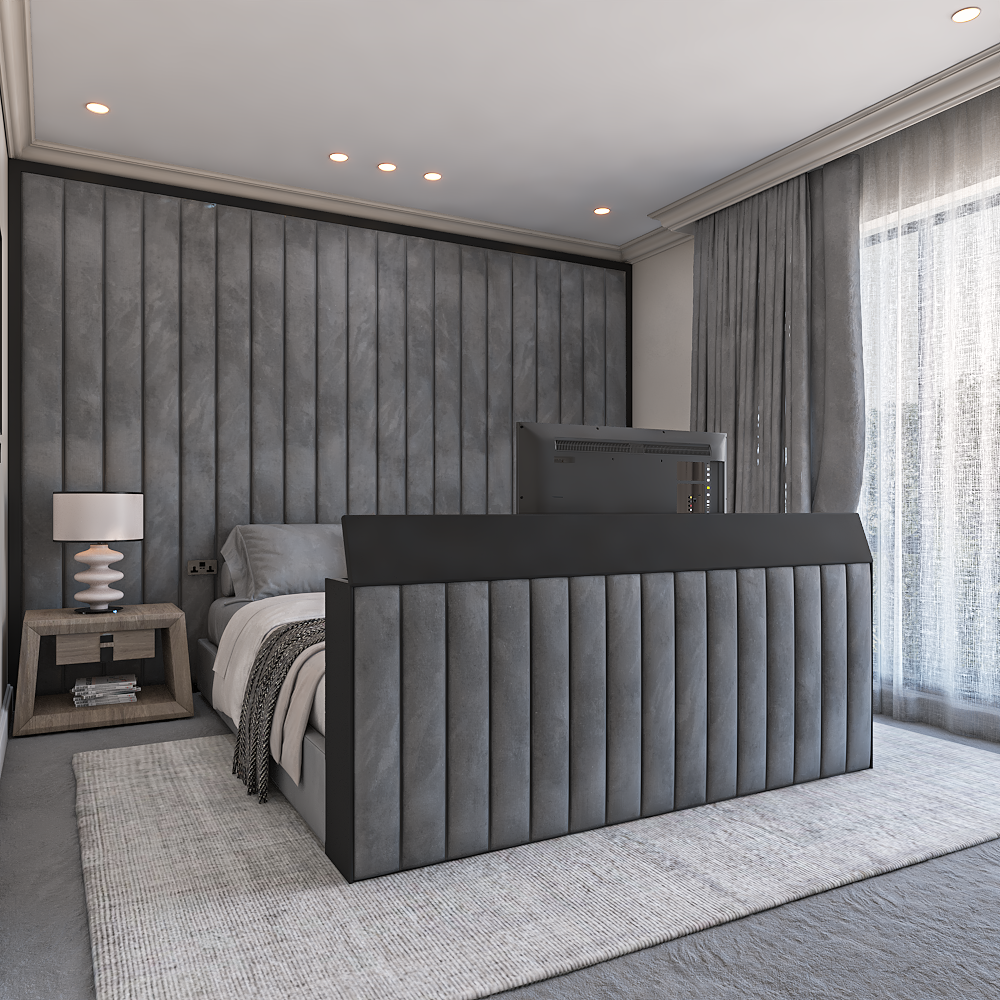
End of Bed TV Stand Buying Guide for Bedrooms
Bedrooms have changed. They are no longer just for sleep. They are places to unwind, relax, and enjoy quiet time. That is why end of bed TV stands have become so popular. They bring comfort, style, and smart use of space together. This guide explains everything clearly. Step by step. So you can choose with confidence.
What Is an End of Bed TV Stand?
A TV stand at the end of the bed sits at the foot of your bed. It keeps your TV at the right height for bed viewing. Some keep the TV visible. Others hide it inside the unit. It blends furniture and technology into one smart solution.
Simple Definition
An end of bed TV stand is a low unit designed for bedroom use. It supports a television. It lines up with the foot of the bed. Some stands are fixed. Some lift the TV up and down.
How It Works
The TV mounts to the stand. In lift models, the screen stays hidden inside the unit. Press a button. The TV rises smoothly. When finished, it lowers back down. Out of sight. Protected.
Why People Choose One
People want comfort. They want less clutter. They want bedrooms that feel calm. An end of bed TV stand does all three.
Space Saving Benefits
Wall space stays free. No bulky cabinets on the sides. No awkward brackets. This is ideal for smaller bedrooms.
Clean Bedroom Look
A hidden TV keeps the room tidy. No black screen staring at you. The bedroom stays peaceful. This matters more than people expect.
Better Viewing Comfort
The TV sits at natural eye level. No craning your neck. No sore shoulders in the morning. Comfort improves instantly.

TV Stand vs Wall Mount
Both options work. But they feel very different.
Key Differences
· Wall mounts fix the TV in one place.
· TV stands stay flexible.
· Lift stands add privacy and protection.
Pros and Cons
|
Option |
Pros |
Cons |
|
Saves floor space |
Fixed height |
|
|
End of Bed Stand |
Ideal viewing angle |
Needs floor space |
|
Lift Stand |
Hidden TV |
Higher cost |
Which Suits Bedrooms Best
Bedrooms need comfort first.
End-of-bed stands are designed for that.
Wall mounts suit living rooms better.
Who Should Buy One
Not everyone needs one. But many people benefit.
· Small Bedrooms
Space matters. Every inch counts. End of bed stands use space wisely.
· Modern Homes
Clean lines. Hidden tech. Minimal clutter. These stands fit modern living perfectly.
· Luxury Bedrooms
Luxury means calm. No visible screens. No mess. Lift TV stands feel hotel-quality.
Types of End of Bed TV Stands
There is no one-size-fits-all option. Knowing the types helps you choose better.
Fixed TV Stands
The TV stays visible. Simple design. Lower cost. Great for everyday use.
TV Lift Stands
The TV hides inside the unit. It rises when needed. Drops away when not. Perfect for style-focused bedrooms.
Manual Lift Systems
Manual lifts use basic mechanisms. They cost less. They need effort. Not ideal for daily use.
Electric Lift Systems
Electric lifts use a motor. They work with a remote. Smooth and quiet. Best for regular use.
Materials and Build Quality
Build quality affects safety. It also affects lifespan.
Solid Wood Bed Frames
· Strong.
· Stable.
· Long-lasting.
· Ideal for larger TVs.
Upholstered Designs
· Soft finish.
· Matches beds easily.
· Adds warmth.
· Popular in luxury bedrooms.
Metal and Mixed Builds
· Metal adds strength.
· Mixed materials add style.
· Good for modern interiors.
Size and Proportions
Size matters more than people think.
Matching Bed Width
The stand should align with the bed width. Too narrow looks odd. Too wide feels bulky. Balance is key.
Height for Viewing
The screen centre should meet eye level. When lying down. Not sitting upright. This avoids neck strain.
Depth and Clearance
Leave walking space. Avoid blocking drawers or doors. Measure carefully.
TV Compatibility
Not all stands fit all TVs.
Screen Size Limits
Each stand has a maximum size. Check before buying. Bigger is not always better.
Weight Capacity
TVs vary in weight. The stand must support it safely. Never guess.
VESA Mount Support
Most TVs use VESA mounts. Check compatibility. This ensures a secure fit.
Viewing Comfort Matters
Comfort affects how often you use it.
Eye Level Explained
Eye level equals comfort. Too high causes strain. Too low feels awkward. End of bed stands get this right.
Neck Strain Avoidance
The correct height protects your neck. Especially during long viewing sessions. This matters more with age.
Day vs Night Viewing
Daytime viewing needs glare control. Night viewing needs gentle angles. Placement helps both.

Storage Features
Many stands offer more than TV support.
Hidden Compartments
1. Perfect for remotes.
2. Consoles.
3. Streaming boxes.
4. Everything stays tidy.
Cable Management
1. Built-in cable routes hide wires.
2. No tangles.
3. No mess.
Extra Drawer Space
1. Some units add drawers.
2. Useful for bedroom storage.
3. Small details add value.
Power and Cabling
Planning power avoids frustration later.
Plug Socket Needs
Lift systems need power. So does the TV. Check socket locations first.
Cable Routing
Good routing protects cables. It also improves safety. Always follow the design paths.
Safety Tips
Never overload sockets. Avoid trailing wires. Safety starts with setup.
Noise and Smoothness
Noise affects comfort.
Motor Noise Levels
Quality motors run quietly. Cheap ones do not. Always check reviews.
Lift Speed
Too fast feels harsh. Too slow feels annoying. Balanced speed feels premium.
Daily Use Comfort
Smooth motion builds trust. You enjoy using it daily. This matters long term.
Style and Design Match
The stand should suit the room.
Modern Bedrooms
Clean finishes. Neutral colours.Hidden technology. Minimal works best.
Classic Interiors
Wood finishes suit classic rooms. Soft tones feel warm. Style matters.
Hotel Style Rooms
Upholstered finishes shine here. Hidden TVs feel luxurious. This look never dates.
Safety and Stability
Safety is not optional.
Tip Over Protection
Strong bases prevent tipping. Especially important with larger screens. Stability comes first.
Child and Pet Safety
Hidden TVs reduce risk. No exposed screens. Peace of mind matters.
Screen Protection
Lift stands protect screens from dust. Also from knocks. This extends TV life.

Installation Basics
Good installation avoids problems later.
Assembly Time
Most stands need basic assembly. Allow time. Follow instructions.
Professional Fitting
Larger units benefit from professional fitting. Especially electric lifts. It reduces risk.
Common Mistakes
Rushing assembly. Ignoring measurements. Poor cable planning. Avoid these.
Real Bedroom Examples
Real use shows real value.
Small Flat Setup
A compact lift stand saved wall space. The room felt bigger. The TV stayed hidden.
Main Bedroom Upgrade
A couple replaced a wall mount. Comfort improved instantly. The room felt calmer.
Guest Room Solution
A fixed stand added flexibility. Guests enjoyed easy viewing. No permanent fixtures.
Cost and Budget Guide
Prices vary widely.
Entry Level Options
Fixed stands. Basic materials. Good value. Ideal for tight budgets.
Mid Range Choices
Electric lifts. Better finishes. Balanced value. Most popular choice.
Premium Designs
Luxury finishes. Silent motors. Long warranties. Best for long-term use.
Long Term Value
Think beyond the price tag.
Durability
Stronger builds last longer. They cost less over time. Quality pays off.
Maintenance Needs
Electric systems need little care. Dust cleaning is enough. Simple upkeep.
Resale Appeal
Quality units hold value. Especially lift designs. A smart investment.
Common Buying Mistakes
Many buyers repeat the same errors.
Wrong Size Choice
Too large overwhelms the room. Too small looks weak. Measure first.
Ignoring Lift Quality
Cheap motors fail early. Noise increases. Quality matters.
Poor Cable Planning
Messy cables ruin the look. They also cause faults. Plan.
Questions Buyers Ask
Clear answers build confidence.
Is It Worth It
Yes, for comfort and style. Especially for bedroom viewing.
Does It Damage TVs
No.
Quality stands protect screens. Proper mounting is key.
Can It Replace a TV Bed
For many people, yes. It offers flexibility. At a lower cost.

How to Choose the Right One
Choosing feels easier with guidance.
Quick Buyer Checklist
1. Measure bed width
2. Check TV size
3. Confirm power access
4. Choose lift type
5. Match room style
Final Decision Tips
· Focus on comfort first.
· Choose quality over price.
· Think long term.
· A good end of bed TV stand changes how a bedroom feels.
· It adds comfort.
· It adds calm.
· And it makes everyday life better.
Frequently Asked Questions
How can you place a TV at the end of your bed?
You can use an end of bed TV stand or a TV lift unit. This keeps the screen at a comfortable viewing height. It also avoids drilling into walls and saves space.
What rules should you follow for a TV stand?
The stand must match the TV size and weight. It should sit level and feel stable on the floor. Cable management and ventilation are also important.
What are the common mistakes with TV mounting height?
Mounting the TV too high is the most common error. This causes neck strain when watching in bed. Ignoring bed height and viewing angle also leads to discomfort.
What is the ideal TV height at the end of the bed?
The centre of the TV should be close to eye level when lying down. This is usually around 90-110 cm from the floor. Correct height improves comfort and reduces strain.
What safety precautions are needed for TV wall mounts
Always fix mounts into solid wall studs or masonry. Use brackets rated for the TV weight. Keep cables secured and out of reach for safety.