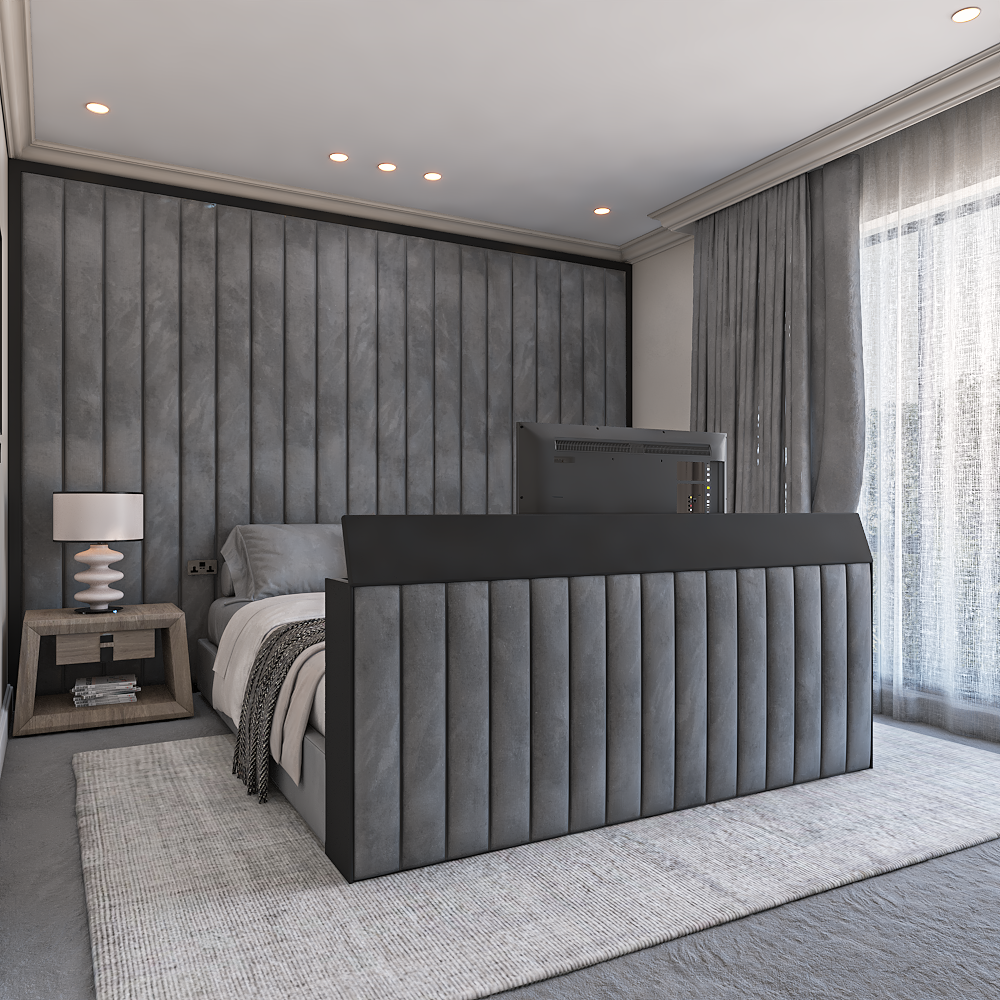


What Size TV Stand Works Best at the Foot of the Bed
Let's agree on one thing first.
A TV at the foot of the bed can be brilliant. It saves wall space. It feels neat. And it turns your bedroom into a truly relaxing place.
But only if the TV stand is the right size.
Get it wrong, and the room feels cramped. Viewing feels awkward. Comfort disappears fast.
Get it right, and everything works together. The bed. The TV. The space.
This guide breaks it all down in clear, simple terms. No fluff. No guesswork. Just practical help you can trust.
Why TV Stand Size Matters
Size is not just about looks.
It affects comfort, safety, and how your bedroom feels every day. A stand that is too big dominates the room. A stand that is too small looks lost and feels unstable. The right size creates balance. It supports the TV properly. And it keeps viewing comfortably.
Comfort First
Comfort always comes first in a bedroom.
When you watch TV in bed, your body is relaxed. Your neck should stay relaxed, too. If the stand is too tall or too low, you feel strain quickly. The correct stand size keeps the screen at a natural viewing height. That means less tension—more comfort. Longer, easier viewing.
Bedroom Balance
Bedrooms need visual calm.
A TV stand that matches the scale of the bed creates a cohesive look, making your room feel more inviting and well-designed.
Nothing feels crowded. Nothing feels out of place. Balance makes the room feel larger and more restful. And that matters more than people realise.
Common Bedroom Setups
Every bedroom is different.
The size of your room and bed influences what works best. Measure your bed width and the dimensions of your room to choose a stand that fits well and looks balanced.
Small Bedrooms
Space is tight in many UK homes.
In smaller bedrooms, slim TV stands work best. They keep walkways clear and avoid blocking light. A compact stand with a lift system is often ideal here. It hides the TV when not in use and keeps the room feeling open.
Master Bedrooms
Master bedrooms give you more freedom.
You can choose wider stands. Deeper units. More storage. The key is still proportion. Even in a large room, the stand should not overpower the bed.
Guest Rooms
Guest rooms benefit from flexibility.
A medium-width stand works well here. It suits different bed sizes and different TV preferences. Simple designs are best. Easy to use. Easy to live with.

TV Stand vs Bed Width
This is one of the most important rules. And it is often ignored.
Match the Bed Size
Your TV stand should relate to the width of your bed.
As a general guide:
1. The stand should be equal to or slightly narrower than the bed
2. It should never be wider than the bed frame
This keeps everything visually balanced.
Avoid Overhang
A stand wider than the bed looks awkward.
It sticks out. It blocks movement. It breaks the flow of the room. Overhang also increases the risk of bumps and knocks. That is not ideal in a bedroom.
Ideal TV Stand Width
There is no one-size-fits-all answer. But there are clear ranges that work well.
Narrow Stands
Best for:
1. Single beds
3. Compact bedrooms
Typical width:
1. 90 cm to 110 cm
These stands save space while still safely supporting smaller TVs.
Standard Width Stands
Best for:
1. Double beds
Typical width:
1. 120 cm to 150 cm
This is the most popular range in UK homes. It suits most bedrooms comfortably.
Wide Stands
Best for:
2. Large master bedrooms
Typical width:
1. 160 cm to 180 cm
Wide stands feel luxurious but need space to breathe.
TV Screen Size Guide
TV size and stand size must work together. Consider your specific TV model and screen size to ensure the stand supports it safely and looks right. One supports the other.
Here is a simple guide.
32 to 43 Inch TVs
Ideal for:
1. Small bedrooms
2. Guest rooms
Recommended stand width:
1. 90 cm to 120 cm
These TVs are light and easy to position.
50 to 55 Inch TVs
Ideal for:
1. Most master bedrooms
Recommended stand width:
1. 120 cm to 150 cm
This is the sweet spot for many homes.
65 Inch TVs
Ideal for:
1. Large bedrooms only
Recommended stand width:
1. 160 cm or more
These screens need solid support and plenty of space.

Height Rules at the Foot of the Bed
Height matters just as much as width.
Eye Level Viewing
When lying in bed, your eyes naturally face forward. The centre of the TV screen should sit close to that line.
For most beds, this means:
1. The TV centre is around 90 to 110 cm from the floor
This keeps viewing easy and natural.
Avoid Neck Strain
A stand that is too tall forces your head forward. A stand that is too low makes you look down. Both cause strain over time. Correct height prevents that completely.
Fixed TV Stands Explained
Fixed stands keep the TV visible at all times.
Simple and Visible
These stands are straightforward. No moving parts. No motors. They are often more affordable and easier to install.
Best Use Cases
Fixed stands work best when:
1. You watch TV often
2. You want instant access
3. You have enough space
They suit practical, no-fuss bedrooms.
TV Lift Stands Explained
Lift stands hide the TV inside the unit.
Hidden When Not Used
When the TV is off, it disappears. The room instantly feels calmer and more open. This is perfect for bedrooms focused on rest.
Popular in UK Homes
TV lift stands are growing fast in the UK. They suit modern lifestyles and smaller spaces. They also protect the screen from dust and damage.
Depth and Clearance Needs
Width and height matter. But depth is often overlooked.
Walkway Space
You should be able to walk around the bed easily.
Leave at least:
1. 60 cm clearance in front of the stand
This keeps movement safe and comfortable.
Drawer Access
If your stand has drawers or doors, allow space for them to open fully. Blocked storage becomes useless fast.
Storage Needs
A TV stand often does more than hold a screen.
Devices and Consoles
Think about:
1. Sky boxes
2. Game consoles
3. Streaming devices
The stand should hold them without crowding.
Cable Space
Good cable space keeps everything tidy.
It also improves airflow and safety.

Safety and Stability
This part is non-negotiable.
Weight Limits
Always check:
1. Maximum TV weight
2. Stand load rating
Never push limits. Stability matters.
Anti-Tip Design
Look for:
1. Solid bases
2. Secure lift mechanisms
3. Anti-tip features
Especially important in family homes.
Measuring the Space Correctly
Guessing leads to mistakes. Measure properly.
Floor to Bed End
Measure from the floor to the top of your mattress. This helps set the right TV height.
Wall to Mattress Gap
Measure the distance from the wall to the foot of the bed. This tells you the maximum stand depth you can use.
Style and Design Match
Function matters. But style still counts.
Modern Bedrooms
Clean lines work best. Gloss, matte, or wood finishes all suit modern rooms. TV lift stands fit especially well here.
Classic Bedrooms
Wood finishes, and softer shapes feel right. Fixed stands often blend better with traditional furniture.
Real UK Bedroom Examples
Real homes show what works best.
Small London Flats
In compact flats, slim lift stands shine. They save space and reduce visual clutter. A 120 cm lift stand with a 43-inch TV is a common choice.
Family Homes
Larger bedrooms allow wider stands. Storage becomes more important. Families often choose 150 cm stands with integrated storage.
Common Sizing Mistakes
Avoid these, and you avoid regret.
Stand Too Tall
This causes neck strain fast.
Always check the viewing height before buying.
Stand Too Wide
Too wide breaks balance and block movement. Match the bed, not the wall.
Wall Mount vs Stand at Bed End
Both have their place.
Pros of Stands
1. No wall drilling
2. Flexible positioning
3. Built-in storage
Perfect for renters and modern homes.
When Mounts Work Better
Wall mounts suit:
1. Very tight spaces
2. Minimalist designs
But they need careful height planning.

Power and Cable Planning
Power matters more than people expect.
Plug Socket Access
Make sure sockets are easy to reach. Avoid trailing extensions where possible.
Hidden Wires
Cable management keeps the room calm. It also improves safety.
Future-Proofing Your Choice
Think beyond today.
Bigger TV Later
You may upgrade your TV. Choose a stand that can handle a slightly larger screen.
Room Changes
Furniture moves. Rooms change. Flexible stand sizes adapt better over time.
Quick Size Checklist
Use this before buying.
Bed Width Check
Is the stand equal to or narrower than the bed?
TV Size Check
Does the stand support your TV safely?
Clearance Check
Can you walk and open drawers comfortably?
Frequently Asked Questions
Best Stand Size by Bed Type?
1. Single bed: 90–110 cm
2. Double bed: 120–140 cm
3. King bed: 140–160 cm
4. Super king: 160 cm+
Best Height for Viewing?
The TV centre should sit around 90–110 cm from the floor when viewed from the bed.
Is a TV Lift Worth It?
Yes, if you value a calm bedroom, hidden screens, and flexible use. For many UK homes, it is a smart long-term choice. Choosing the right TV stand size for the foot of the bed is not hard. You just need clear rules, real measurements, and a focus on comfort. Get those right, and your bedroom will feel better every single day.
How deep should a TV stand be at the foot of the bed?
Most TV stands at the foot of the bed are 40-50 cm deep. This allows space for the TV mechanism and devices without blocking the walkway. Always leave at least 60 cm walking space in front for comfort and safety.
Can a TV stand be smaller than the TV?
The stand should always be wider than the TV's base. If the TV base overhangs, it becomes unstable and unsafe. For best support, choose a stand that is at least 5 to 10 cm broader than the TV base.